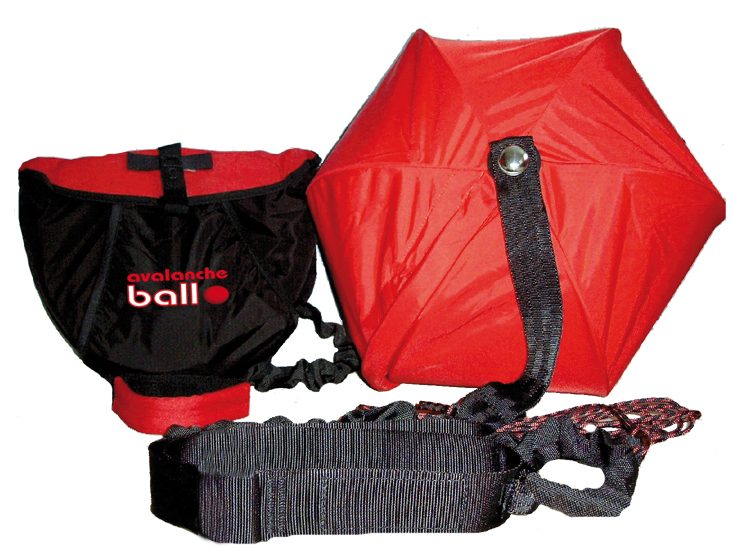
Avalanche Ball
€ 299
- Red buoyancy ball
- 6 m connecting line
- Waist belt and system bag, fits common touring packs
View productAlso on Amazon
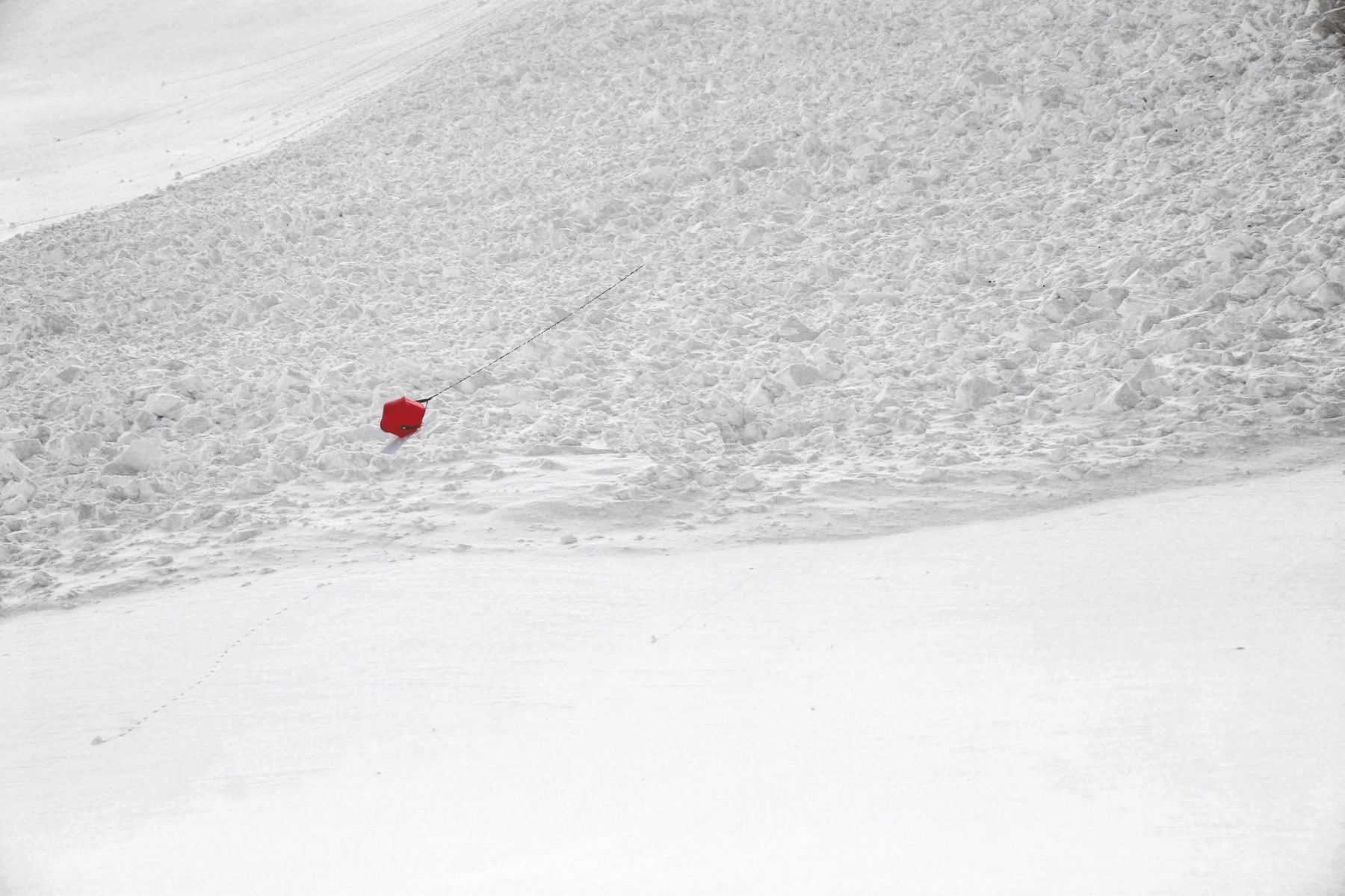
The red ball stays on the surface of the avalanche. Its line leads straight to the buried person.
Only about 10% of fully buried people were deeper than 1.5 m.
SLF Davos, 729 full burials over 20 yearsAbout 90% survive the avalanche and the first 15 minutes. After that, the chances drop quickly.
according to Dr. BruggerThe line stays mostly on the surface and leads rescuers to the person without a search device.
includedIf you are caught by an avalanche, pull the release handle. Spring force opens the ball in seconds, with no gas cartridge.
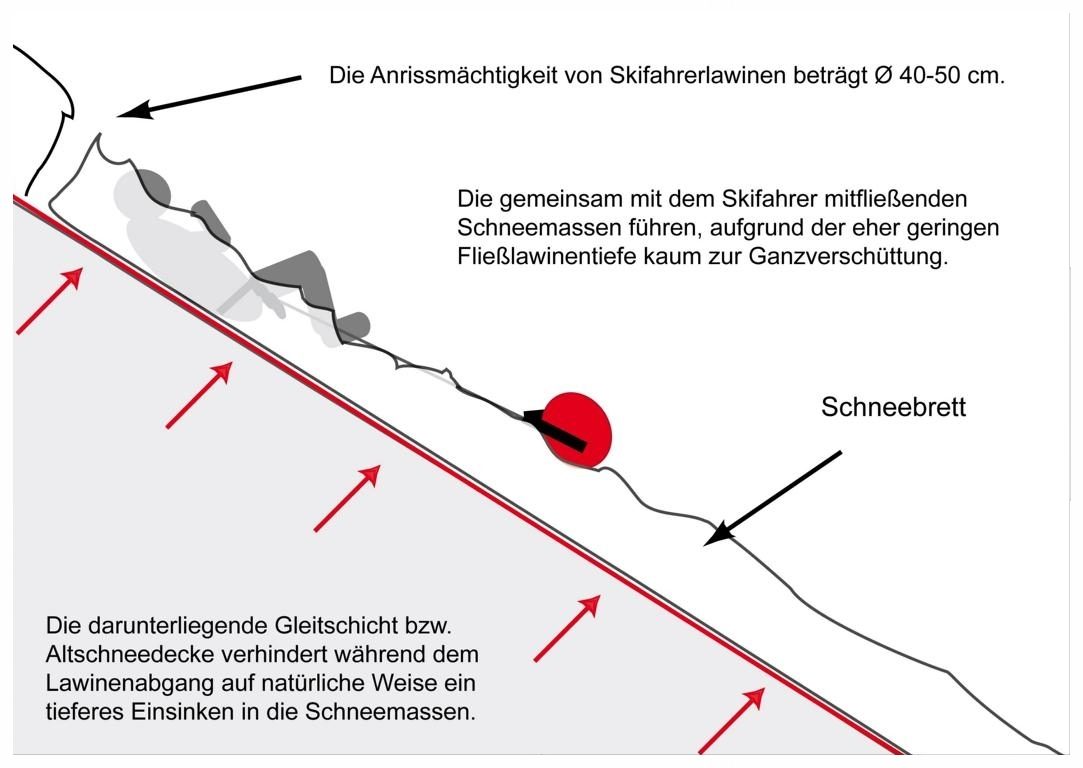
Skier-triggered avalanches break on average only 40 to 50 cm deep. The moving snow is therefore usually too shallow for a full burial. The hard old snow layer below stops you from sinking deeper while it slides.
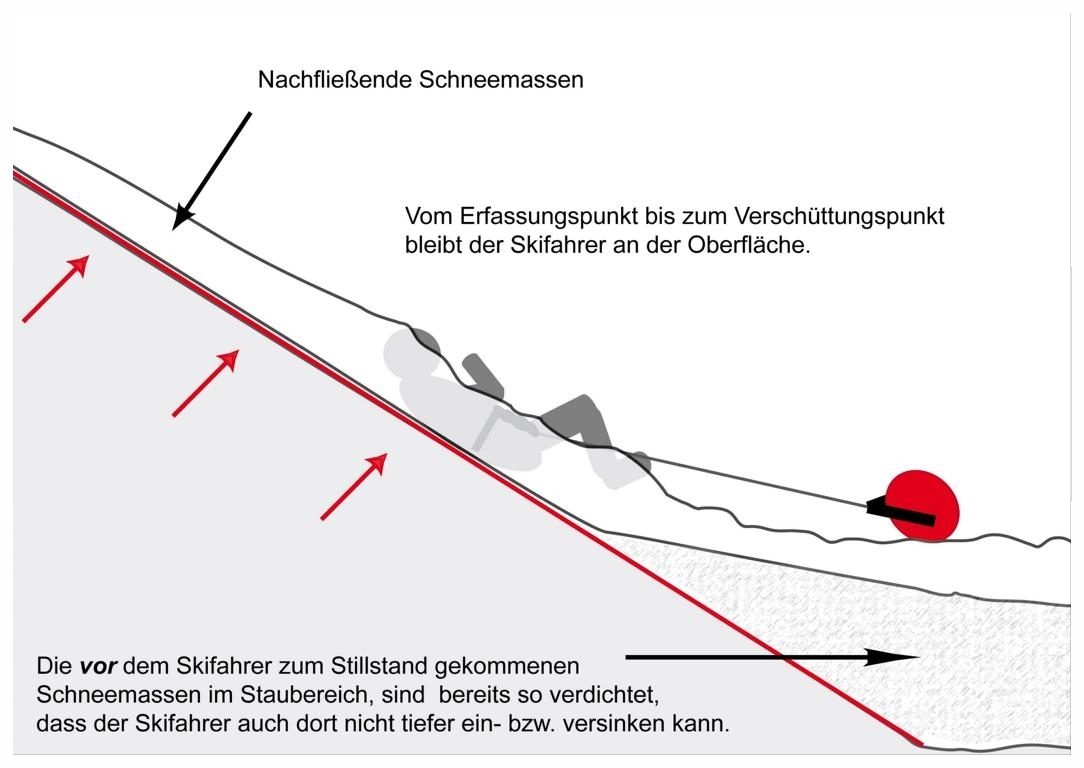
From being caught until the avalanche stops, the skier stays on the surface. Snow that comes to rest ahead of him in the deposition zone is already so compacted that he does not sink deeper there either.
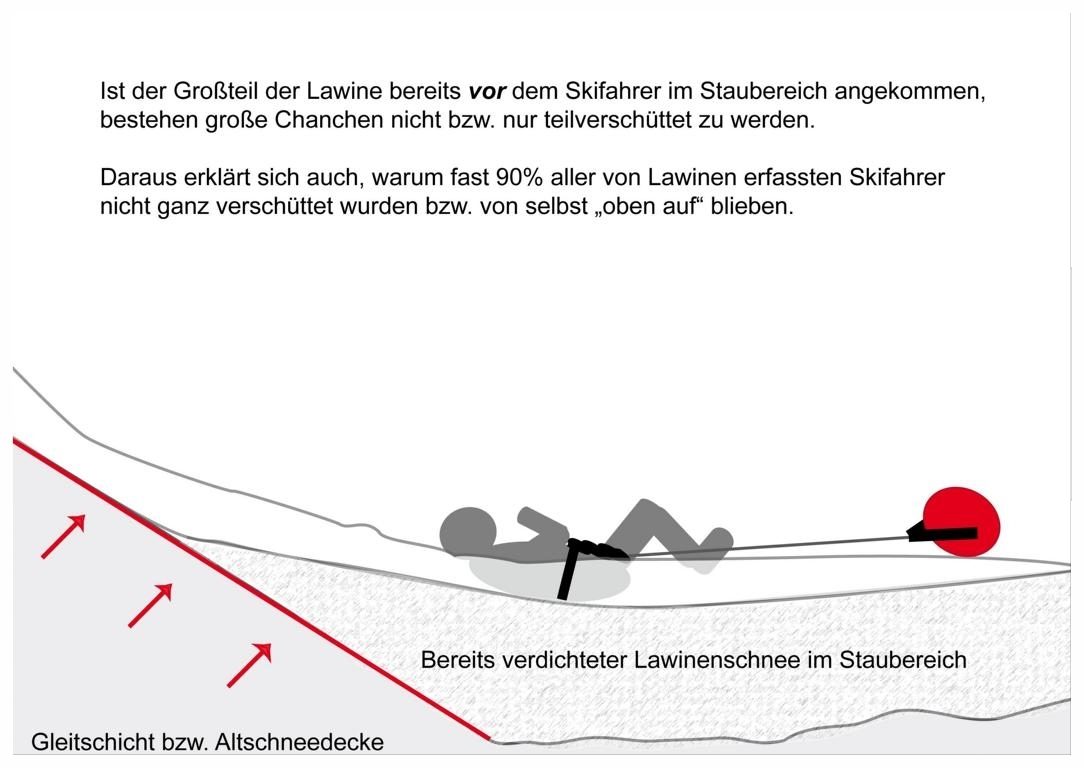
If most of the avalanche has already reached the deposition zone ahead of the skier, he usually stays on top or is only partly buried. That is why almost 90% of skiers caught stayed on the surface.
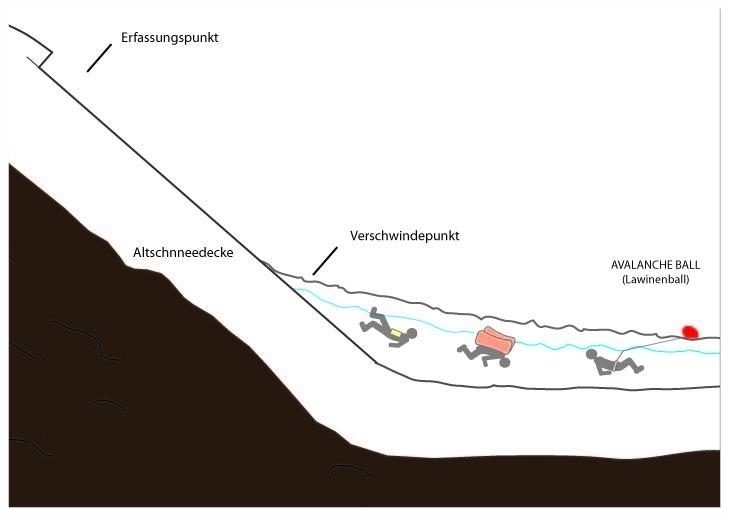
If large amounts of snow follow, a full burial can happen. Items that happen to be visible, or an airbag fixed to the body, are then often covered too. Thanks to its 6 m line, the Avalanche Ball moves up and stays visible the longest.
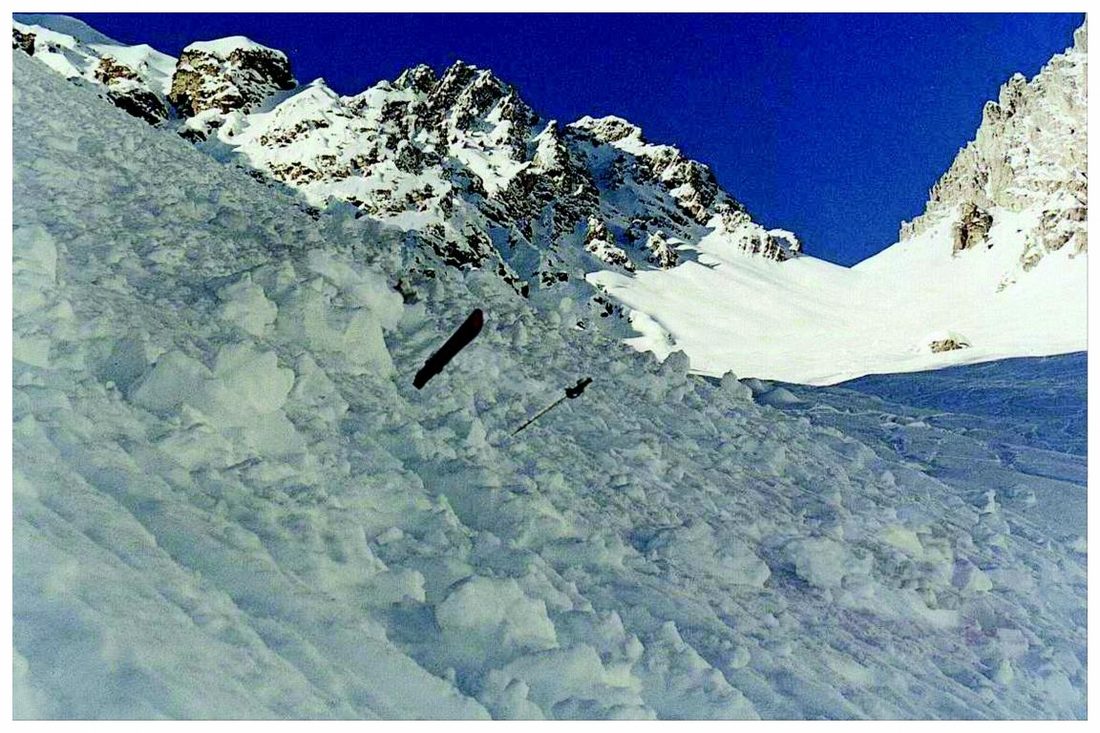
According to the SLF winter reports 1994/95, 1996/97 and 2003/04, every fully buried person found through visible equipment was rescued alive.
Source: SLF Davos, winter reportsVideos load only after you click. Data is then sent to YouTube. Some videos are in German.
As a retrofit kit for your own touring pack or built into the freeride backpack.
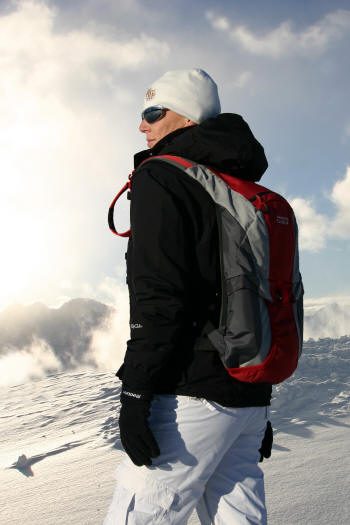
The Avalanche Ball was tested by SLF Davos, by the German Alpine Club and in an avalanche test by German TV channel ARD.