Where transceivers reach their limits
With a transceiver you can only find a fully buried person if they carry a switched-on device and their companions know how to use theirs. Your own new device only helps if the others master it.
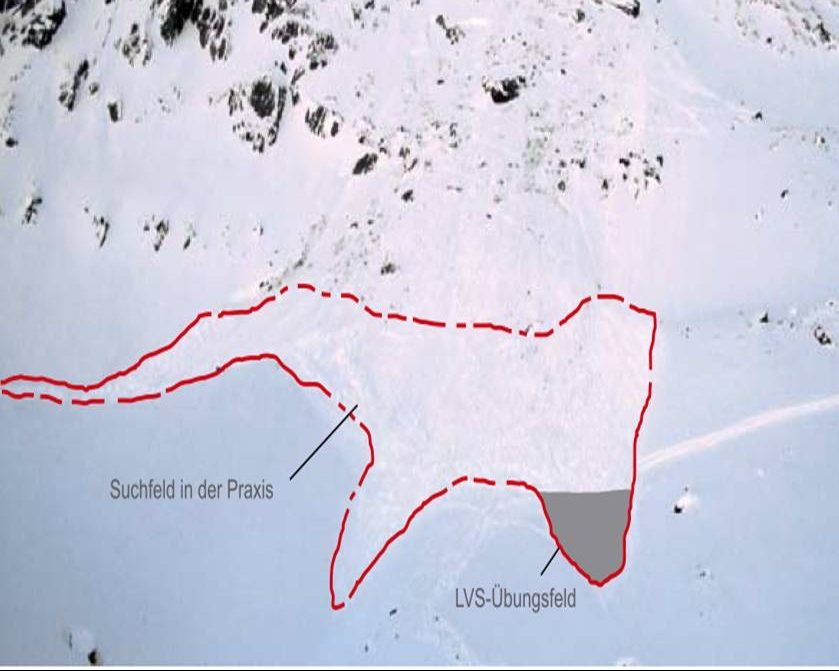
- Large search areas: According to SLF, an average avalanche measures about 60 × 310 m, the size of three football pitches. Practice fields are usually much smaller.
- Wrong signals: Under stress, helpers forget to switch their device to search mode.
- Several buried people: Many signals at once make the search harder.
- Time pressure: Professional rescue usually arrives after the decisive 15 minutes.
Both together
The Avalanche Ball replaces neither transceiver nor shovel and probe. It shortens the search or makes it unnecessary when the ball lies on the surface. Even companions without transceiver experience can help.
Our recommendationAlways carry transceiver, shovel and probe. Practise regularly on large fields, including with several buried people.