The limits of prevention
Even experienced mountaineers die in avalanches. Experts such as Werner Munter, Peter Geyer and Patrick Nairz stress that there is no reliable way to judge avalanche danger. Good planning lowers the risk, but it does not remove it.
Most are not buried deep
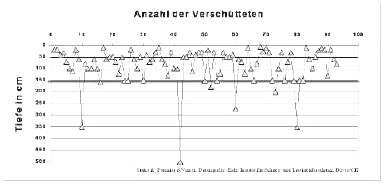
SLF Davos analysed 729 full burials over 20 years. The average burial depth was 70 cm. Only about 10% were deeper than 1.5 m. From 70 cm, a person can be dug out in 2 to 3 minutes, if you know where to dig.
The clock is ticking
According to Dr. Brugger, about 90% of buried people survive the avalanche itself and the first 15 minutes. After that, the chances drop quickly because exhaled carbon dioxide builds up in front of the face. At the same time, the snow hardens.
Visible means found
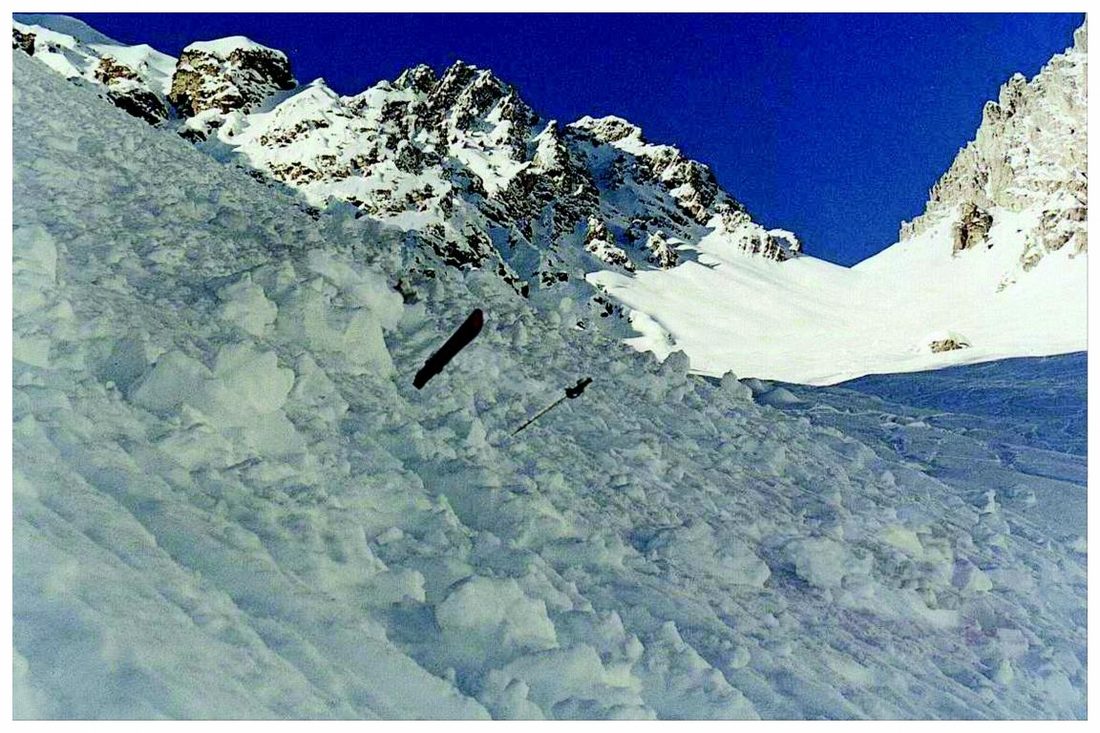
According to the SLF winter reports 1994/95, 1996/97 and 2003/04, every fully buried person found through visible equipment was rescued alive. The Avalanche Ball makes that visibility something you can plan for: it lies on top, it is red, and its line leads straight to the person.
What stays on the surface
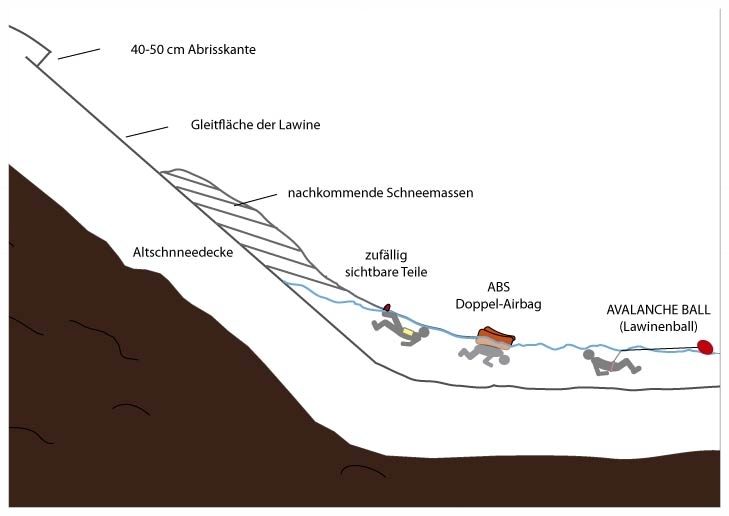
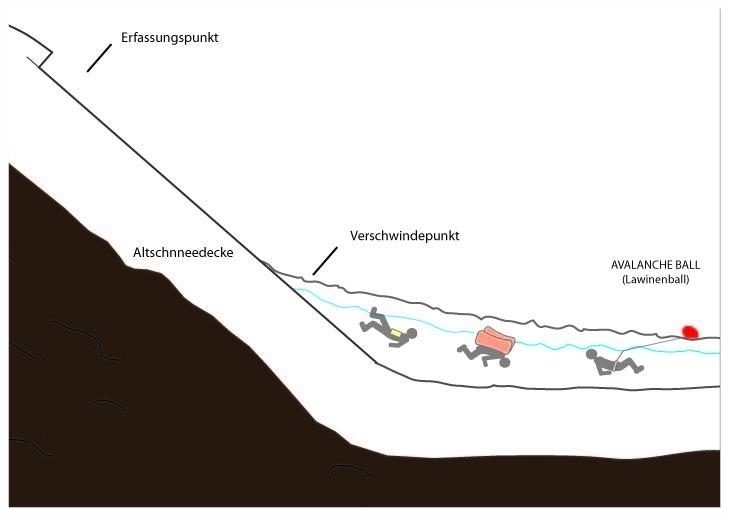
The diagrams show three cases in cross-section: items that happen to be visible, an airbag backpack (ABS) and the Avalanche Ball. Airbags aim to prevent burial. The ball aims to speed up finding, even if someone is buried.